

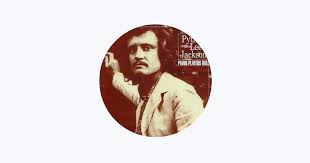
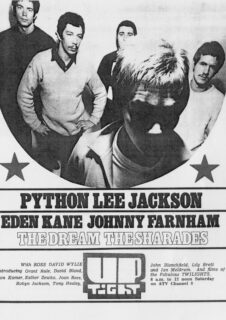
Um, Um, Um (C Mayfield) 1966 and In A Broken Dream (D K Bentley) – Python Lee Jackson 1972
NB. 4TheRecord will be on recreational leave for a couple of weeks between Monday September 21 to Friday October 2 with regular blogs returning on Tuesday October 6 and Thursday October 8. Your great support of this site and your encouraging comments are much appreciated. Keep on rocking in the free world!
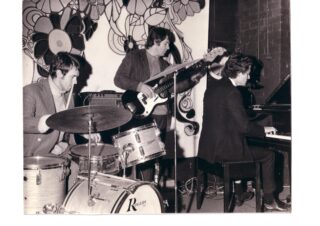
Python Lee Jackson was formed in December 1965 in Sydney by two musos from the United Kingdom – Frank Kennington (vocals, ex-Unit 4 and The Missing Links) and Mick Liber (guitarist, ex Clay Alison and the Searchers and Frankie Reid and the Casuals). Both had played the west London blues and R&B scene, and after they recruited local drummer David Montgomery (ex-Jeff St John and the Id) and bass player Roy James, they thought about an appropriate band name. Both Liber and Kennington were also former members of the Denvermen, a surf instrumental group in Sydney, from mid-1965, but were keen to re-invent themselves locally as an R&B band and briefly appropriated the name Unit 4 before ultimately settling on the more mysterious and exotic Python Lee Jackson. Below Unit 4 – L-R Dave Momtgomery, Frank Kennington, Lloyd Hardy, Roy James, Mick Liber.
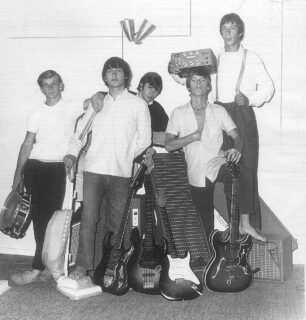
The name had been appropriated from an English emigrant barrister/blues guitarist named Andre de Moller, who first revealed the name at Suzie Wong’s Chinese restaurant in Sydney, where it attracted much interest and curious crowds, the name embodied the right mix of deep south swampy bayou sleaze, with a touch of reptilian threat and menace, all wrapped up in the ghostly image of a gnarly old blueseman from the Mississippi delta. Frank Kennington (vocals), Mick Lieber (guitar), David Montgomery (drums) and Roy James (bass), emerged as the original PLJ in December 1965, they were all white boys who worshipped the blues, and they worked gigs around Sydney at discos, university functions, surf clubs, and for a time their “underground” status made them the darlings of the smart young set around town. But within their ranks lurked several colorful personalities, Roy James had priors for theft and housebreaking and once appropriated several Vox amps belonging to a visiting English band from the Sydney Stadium. While Frank Kennington was partial to stealing cars, and soon after he was busted for marijuana possession, he was incarcerated in Melbourne’s Pentridge Prison, and upon his release in 1966, was deported back to the UK as an undesirable alien. Back in London Kennington became a roadie for The Who, then Motorhead’s first road manager, and subsequently relocated to California where he passed away in 1998. Python Lee Jackson 1966 L-R Dave Montgomery, Mick Liber, Mal McGee, Lloyd Hardy, Dave Bentley.
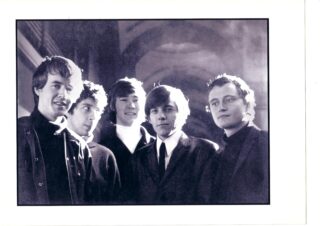
Lieber and Montgomery would assemble a new lineup including David Bentley (keyboards, ex- Riverside Jazz Band/Jeff St John and the Id), Lloyd Hardy (aka Lloyd Hudson, bass, ex Unit 4), and importantly a charismatic lead singer /guitarist Malcolm McGee (ex-Wild Cherries), who had specialized in Chicago blues and dressed in the latest mod fashions. The band would emerge as a stylish soulful purveyor of funky Motown- inspired sounds, they became the resident act at Rhubarb’s Club in Sydney’s Liverpool Street, but by 1966 Dave Bentley had departed to be replaced by Bob Welsh on piano, and they debuted their first single Emergency Ward b/w Bo Diddley’s Who Do You Love with DJ Ward Austin providing lead vocals, but it failed to chart. Below – Dave Bentley, Rhubarbs 1966, Berties Disco Poster.


In late 1966 they released a cover of Um, Um, Um the 1964 US #5 hit for Chicago soul singer Major Lance (backed by the Impressions) which peaked at #79 locally and followed up with a cover of the Sam and Dave classic Hold On I’m Comin’ which did better at #42. The band were signed to Nat Kipner’s Spin Records and recorded at Ossie Byrne’s St. Clair studio in Hurstville (Syd) where the Bee Gees recorded all their early songs in Australia, Maurice Gibb is credited with producing these two minor hits for the band. Lead singer Mal McGee would leave the group and join Peter Doyle and Rob Lovett in the blue-eyed soul trio the Virgil Brothers who scored with Temptation’s ‘Bout to Get Me in 1968, and amid a moving feast of personnel changes over the ensuing years PLJ continued to be fan favorites in Melbourne where they gigged regularly at Sebastians, Berties, Catcher, and Opus and in Sydney at the Here Disco and The Flowerpot, up until 1968 when the band decided to try their luck in the UK.
Upon arrival in the UK in 1968 PLJ comprised David Bentley (vocals/keyboards), John Helman (bass), Mick Liber (guitar), and David Montgomery (drums), and would subsequently replace Helman with expat Aussie bassman Tony Cahill formerly of the Purple Hearts and the Easybeats, while Brit guitarist Gary Boyle (Bian Auger and Trinity) also guested on their sessions. The history of Australian popular music in the 1960’s and 1970’s was littered with stories of promising local groups who made the pilgrimage to London seeking international fame and fortune only to find that they were unappreciated in a highly competitive and ever-changing musical scene that barely tolerated amateurish Antipodean intruders. For every success story – the Bee Gees and the Seekers were highly successful in the UK at this time, the Easybeats had scored a hit record and AC/DC were set to emerge – there were many other Aussie groups whose spirit and resolve was crushed trying to sustain a precarious existence living in dingy squats, scrambling for poorly-paid gigs, combating union resistance to overseas acts, and surviving the English weather and homesickness. The Masters Apprentices, Axiom, Sherbet, Twilights, Mississippi, Groove and the Groop all returned home wiser but no wealthier and promptly split up following their UK experience. Below – The Groove, The Groop, Sherbet.


However Mick Liber was an expat Londoner who still had the remnants of a local network there into which he tapped once back in Britain, he got some pub gigs with his old band Frankie Reid and the Casuals and Ronnie Wood set him up with some session work, by April 1969 Liber had scored a deal with CBS thanks in part to PLJ’s prior connection with Richard Neville in Sydney, who would become notorious as a central figure in the OZ obscenity trial at the Old Bailey in 1971. The band were also getting higher-profile gigs at such venues as the Vesuvio Club, the Arts Lab and the Bottleneck Club, and soon headed for the Youngblood Studios to record their debut album, with producer Miki Dallon (The Sorrows, Mac and Katie Kissoon, Don Fardon, Apollo 100). PLJ recorded a couple of demos for CBS A&R man Clive Selwood with a mystery singer, Youngbloods producer Micki Dallon would ultimately own three of the titles from these sessions, It’s a Groove to be Dead, I Wonder Who, and Big Fat Momma, Dave Bentley sang on Really Tried to Love You, and Clive Selwood was impressed with these rough demos and scheduled the band to try for a hit single. Below L-R – Producer Miki Dallon, OZ Magazine “Schoolkids Issue”, Rod “The Mod” Stewart.


Dave Bentley takes up the story- “That afternoon, while I was waiting for my girlfriend to turn up for after-work drinks, I tapped out some random feeling-sorry-myself lyrics and, in the evening I put some chords and a melody to the words,” said Bentley. “The song became In a Broken Dream and next day, as I was walking past a record shop, I heard Joe Cocker singing With a Little Help from My Friends and decided that I wasn’t the right guy to sing my song. When I told the other members of the band that I wouldn’t be singing, they were very pissed off. Next thing I remember, I’m in Montgomery’s Chelsea flat teaching the lyrics to Rod Stewart who had been recruited by an acquaintance of Mick Liber” Montgomery continued the story: “We had a ‘manager’, a slick car salesman with pretensions to become Andrew Loog Oldham or Brian Epstein. He told us he knew Rod Stewart very well, having sold him a Lotus or Ferrari or something, and he was sure he could get him to join the group or at least sing on the recording date.” Bentley, who recalls hearing that the band’s erstwhile manager had persuaded Stewart to sing the song in exchange for a set of car mats, says the session went badly at first.“The band hadn’t done much playing in London. Everyone was feeling uptight and the first run-throughs of ‘In a Broken Dream’ were less than promising,” he explained. “In upshot, [the late] radio presenter John Peel, who was producing the track for his Dandelion label, sent out for beer – and we drank quite a lot of this stuff in the interests of heightened relaxation. Rod, as always, sang well but, because the lights had been doused, he missed the last verse, repeating the first one instead, filling in at one point with a hummed mmm mmm mmm which subsequent cover versions have faithfully copied.” To kick off the session, Stewart and the group had begun jamming on a track that would later turn up on the B-side of the first pressing of In a Broken Dream under the title, Doin’ Fine. The track was a spirited one-chord groove that harked back to the band’s glory days at Sydney’s Rhubarb’s club when Bentley occasionally took over the microphone to deliver an impromptu stream-of-consciousness monologue over a repetitive riff. Stewart for his part used the same groove to accompany lyrics loosely based on The Temptations’ Cloud Nine. It was spur of the moment stuff.
Sliding doors scenarios for this song, at once a flop, then the band’s biggest hit.
The title track was cut from the same soul/blues template for which PLJ had been known, but there was also an intriguing West Coast psychedelia meets Procol Harum vibe about its raw energy and crackling power. Montgomery’s insistent drums and Jaime Byrne’s pumping bass provided a framework for Liber’s soaring and impassioned guitar, mingled with Bentley’s funky Hammond licks – and Rod Stewart’s gravelly voice topping off the groove. Rod delivered a soulful, bluesy, mod rock rendition, subtle and nuanced, he captured the angst and despair in the lyrics about aspirations never realised or abandoned, and animated them in a way that would have seemed challenging when first read “Don’t push your love too far / Your words won’t leave a scar/ Right now is where you are/ In a broken dream” Issued in 1970 using the unnamed session singer’s demo vocals, the song did not chart, and Stewart agreed to be paid an amount, equivalent to the cost of a new set of car seat covers or mats for his vehicle. This seemed to be the end of the road for Python Lee Jackson, and the song, but not for the singer. Rod Stewart who recorded the original version of In a Broken Dream, before he joined the Faces, with no solo hits to his credit, pre-dating Maggie May and his “Rod the Mod” fame, would become a global superstar. The Dave Benley Trio- L-R Dave Montgomery (drums), Hamish Hughes (bass), Dave Bentley (keyboards).
“Everyone liked the track In a Broken Dream but, for some reason, nothing happened.” The word ‘hype’ had an ominous resonance at the time and John Peel, who was the guru of anti-hype, felt ambivalent about a well-known singer performing anonymously on the recording,” explained Bentley. As a result, the track languished in the vaults for the next year – and Bentley resumed his career as a journalist. That is until early 1970 when producer Miki Dallon, who had gained possession of the tapes of In a Broken Dream, contacted him. “[Clive Selwood] came to my office and played three titles: “In a Broken Dream’, ‘Doin’ Fine’ and ‘The Blues’, which although featuring the distinctive voice of Rod Stewart, I wasn’t all that impressed with at first,” recalled Dallon. “They hadn’t been professionally produced – more thrown together in my opinion – a bit of a shambles really.” Despite his initial reservations, Dallon asked Selwood to leave him with a copy of the tape and after a few more listens began to get ideas about how he might turn In a Broken Dream into a far more commercial track. As Dallon admits, it was only after meeting David Bentley that he was convinced the project was worth pursuing and instructed his lawyer to make the deal. A few days later the multi tracks were dumped on Dallon’s desk. Over the next couple of months Dallon drifted in and out of the Pye Studios mixing, re-mixing, adding, subtracting, over-dubbing and adding backing vocals in the chorus before setting a release date for October 1970. Below- Trippy Dream Imagery, Scene from the Music Vid for In A Broken Dream, Youngblood Label.


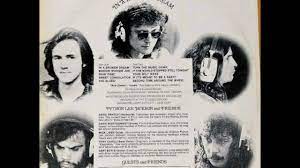
A definitive re-recording of the song by Miki Dallon of Youngblood Records was re-issued in 1972 with lead vocals attributed to Stewart on the recording for the first time, Stewart went on to become a global superstar, and eventually In a Broken Dream assumed the cache of an early Rod Stewart classic recording, it climbed to #3 on the UK charts in September for a substantial hit on the strength of Stewart’s new -found celebrity. There was also a promo video which was essentially of the hippy, trippy, soft porn genre, with lots of bare breasts and bums and swirling psychedelic artwork which cannot be downloaded from YouTube because of its risque images, but a still photo from the clip is featured above. The song failed to really chart in Australia (#84 in ’72), and we are left to wonder if the famously tight-fisted Rod Stewart ever tried to renegotiate his session fee, after the record leapt into the UK top 10, and stayed there for five weeks. In A Broken Dream was also covered by UK band Thunder who took it back into the charts again in 1996, and Rod Stewart would re-record it again with Pink Floyd’s David Gilmour and Led Zeppelin’s John Paul Jones for inclusion on his 2008 album Rod Stewart Sessions 1971-88. But the little Aussie battler song still had some life left in it, when in 2015 US rapper A$AP Rocky paid to sample Stewart’s vocals from In A Broken Dream for a new track entitled Everyday, and the royalty cheques started coming in again for Dave Bentley’s one-hit-wonder. Mick Liber was well regarded as a session player in London and toured with Ashton Gardner and Dyke before returning to Australia, Montgomery remained in Los Angeles, Byrne returned to Australia and re-joined The Groove, Dave Bentley still performs in Brisbane, and sadly Tony Cahill passed way in 2012. Below- Python Lee Jackson 1971.


Thank you for another great article. Especially enjoyed the insight on song Um,um,um.
Have a great vacation
LikeLike
Hi AV, always great to get your feedback, thanks for your continued support, PLJ were a very soulful outfit, and Mal McGee was a great frontman, YouTube has several other clips of their music worth checking out, looking forward to a spring break in the sunshine, best regards Graeme 4TR.
LikeLiked by 1 person